

 Refresh
'Vessel types, Demand, Supply & Disruptions - what's currently driving the bulk shipping
Want to win a job like this?
This customer received 37 PowerPoint designs from 5 designers. They chose this PowerPoint design from Graphic Guy as the winning design.
Join for free Find Design Jobs
-
 £90
£90
-
 37 designs
-
 5 designers
PowerPoint Design Brief
This is required for a talk that needs to cover the following matters
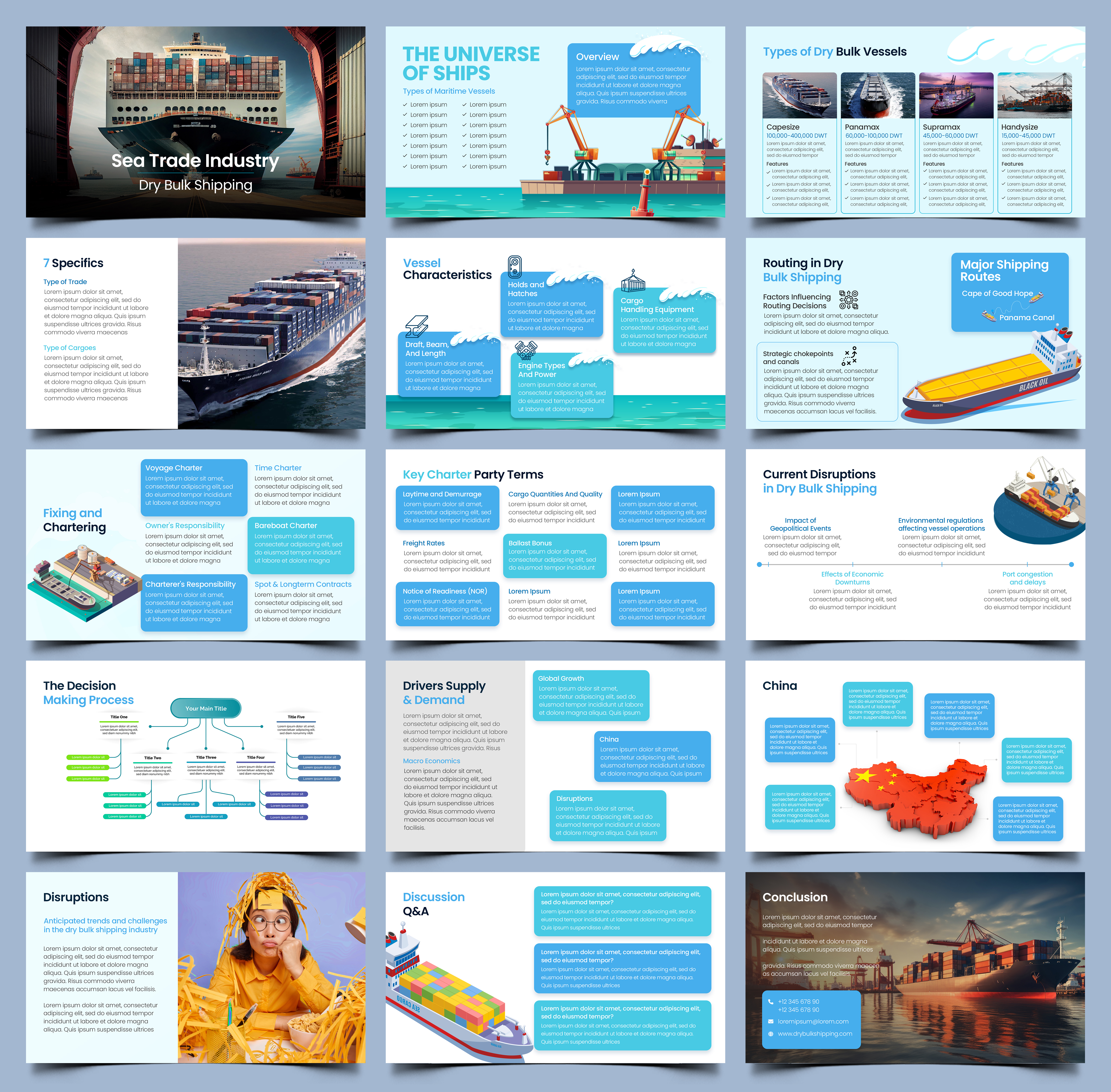
the difference between small, handysize, handymax, panamax, capesize, and very large bulk carriers, how the trade differs, self loading/unloading etc as an intro to the dry bulk trade and what's currently driving the bulk shipping markets.
The below is an initial breakdown on the slides but not finalised
There will need to be an additional slide on the importance of China for the dry bulk trades
Slide 1: Introduction
Welcome and brief overview of dry bulk shipping
Importance in global trade and economy
Slide 2: Types of Dry Bulk Vessels
Capesize: 100,000-400,000 DWT
Panamax: 60,000-100,000 DWT
Supramax: 45,000-60,000 DWT
Handysize: 15,000-45,000 DWT
Description and key features of each vessel type
Slide 3: Vessel Characteristics
Holds and hatches
Draft, beam, and length
Cargo handling equipment
Engine types and power
Slide 4: Routing in Dry Bulk Shipping
Major shipping routes (e.g., Cape of Good Hope, Panama Canal)
Factors influencing routing decisions (e.g., weather, fuel costs)
Strategic chokepoints and canals
Slide 5: Fixing and Chartering
Voyage Charter
Owner's responsibility
Charterer's responsibility
Time Charter
Bareboat Charter
Spot and long-term contracts
Slide 6: Key Charter Party (CP) Terms
Laytime and demurrage
Freight rates
Notice of Readiness (NOR)
Cargo quantities and quality
Ballast bonus
Slide 7: Current Disruptions in Dry Bulk Shipping
Impact of geopolitical events (e.g., trade tensions, conflicts) on shipping lanes
Effects of economic downturns (e.g., COVID-19 pandemic) on demand and supply chains
Environmental regulations affecting vessel operations
Port congestion and delays
Slide 8: Market Trends and Innovations
Technological advancements in vessel design (e.g., eco-friendly propulsion systems, fuel efficiency)
Digitalization and smart shipping solutions
Sustainability initiatives in the industry (e.g., ballast water treatment, emissions reduction)
Slide 9: Mitigation Strategies for Disruptions
Diversification of trading routes and markets
Investment in fleet optimization and efficiency measures
Collaboration with industry partners and stakeholders to address common challenges
Continuous monitoring and adaptation to changing market conditions
Slide 10: Case Study
Example of a recent disruption and its impact on dry bulk shipping operations
Lessons learned and strategies employed to mitigate the effects
Slide 11: Future Outlook
Anticipated trends and challenges in the dry bulk shipping industry
Opportunities for innovation and growth
Importance of sustainability and resilience in shaping the future of the industry
Slide 12: Conclusion
Recap of key points
Call to action for stakeholders to collaborate and innovate for a sustainable and resilient dry bulk shipping industry
Slide 13: Q&A